


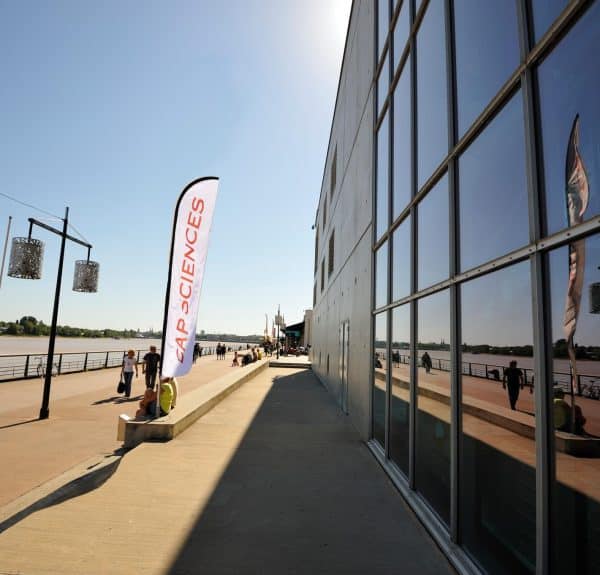
Until 29 August 2027, Cap Sciences presents “Crotte ! Que fait le microbiote ?” (Poop! What does the microbiota do?), a funny, hands-on exhibition about digestion and the bacteria that live in our gut. From age 7, at Hangar 20, quai de Bacalan.
You go in through a giant mouth, cross the stomach, follow the intestines and stop by the “Cacabinet”. From 3 October 2026 to 29 August 2027, Cap Sciences devotes its main exhibition to the microbiota, the billions of bacteria, viruses and yeasts living in our gut. The subject makes children laugh, and that is the idea. At Hangar 20, on the quai de Bacalan, “Crotte ! Que fait le microbiote ?” (Poop! What does the microbiota do?) is a family visit, from age 7.
At a glance
The exhibition
The route follows the path of food from swallowing to defecation. Each organ has its own zone, with hands-on activities, games and experiments, and a stop at the famous “Cacabinet”, which shows what goes on behind the scenes of digestion.
The exhibition then changes scale. Bacteria, viruses and yeasts, invisible to the naked eye, make up the microbiota and play a role in digestion, immunity and even mood. In a laboratory, visitors find out how scientists study it and which discoveries have changed the way we see it.
The last part offers practical ideas for looking after your microbiota every day, from diet and fibre to lifestyle habits.
Throughout the visit, the Défi Curieux is a team game for putting what you have just learned to use. The exhibition was designed and produced by the Cité des sciences et de l’industrie in Paris, and it is inspired by the best-seller “Gut” by Giulia and Jill Enders.
With the family
The tone is funny, there are plenty of hands-on activities and the Défi Curieux is played in teams, which makes it a real outing to share between parents and children. For 3 to 6 year olds, Cap Sciences runs Le P’tit Cap, a space designed for their age, at €4.50 per person, on Wednesdays, Saturdays and Sundays at 3:30pm and 4:45pm, and every day during school holidays.
If you have time, Cap Sciences is also showing Anatomik Park until 29 March 2027, another exhibition about the human body, at €7 full price and €5.50 for ages 5 to 12. To find out more about the venue, read our guide to Cap Sciences.
Good to know
💡 Bordeaux City Tours tip
Our double-decker bus leaves from the Tourist Office at 10 cours du 30 Juillet. In about 1 hour 20 minutes, the Visit without descent tour runs along the Garonne quays as far as the Cité du Vin and the Jacques Chaban-Delmas bridge, a stone’s throw from Cap Sciences, with a special children’s commentary for younger passengers.
There are four departures a day, at 10:15am, 11:55am, 2:30pm and 4:10pm, from €14 per person, except on 24 and 25 December. Take a morning departure, have lunch in the city centre, then head to Cap Sciences on tram B, La Cité du Vin stop, for the 2pm opening.
Frequently asked questions
Cover photo: Pierre Baudier, Cap Sciences à Bordeaux, licensed under CC BY-SA 4.0, via Wikimedia Commons
Bordeaux is rich in history and heritage with its 350 UNESCO listed buildings. Each one more unusual than the next, don’t miss out on discovering them.
We have put together a list of the most important places in the Port de la Lune to visit…
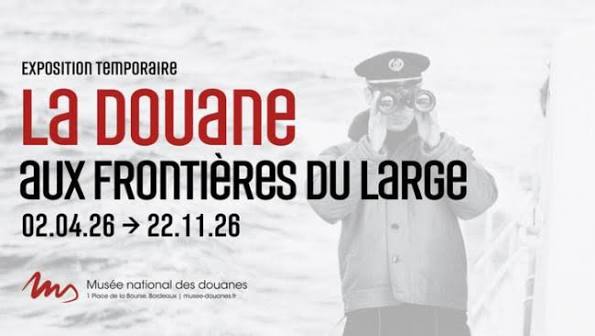
On the quays of Bordeaux, a stone’s throw from the Miroir d’eau, the Musée national des Douanes opens the door to the history of the coastguards and smugglers who shaped the French coastline. The exhibition “La douane aux frontières du large” runs from 2 April to 22 November 2026, in the heart of the Saint-Pierre district.
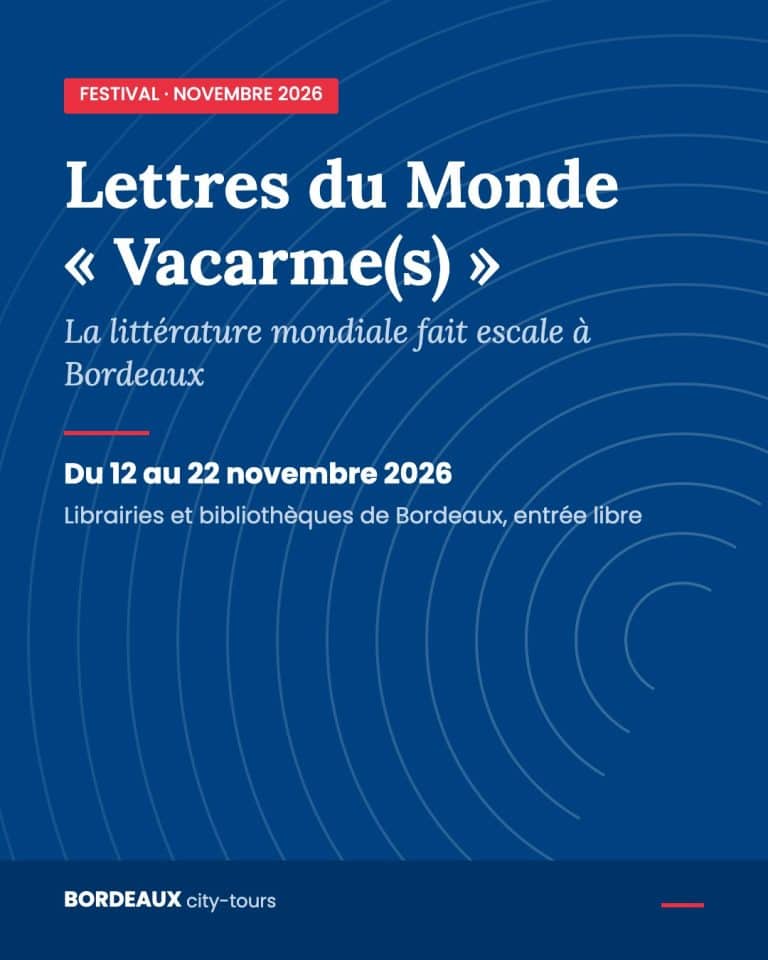
In Bordeaux’s bookshops and libraries, writers from all over the world meet their readers, mostly with free entry. The “Lettres du Monde” festival runs from 12 to 22 November 2026.
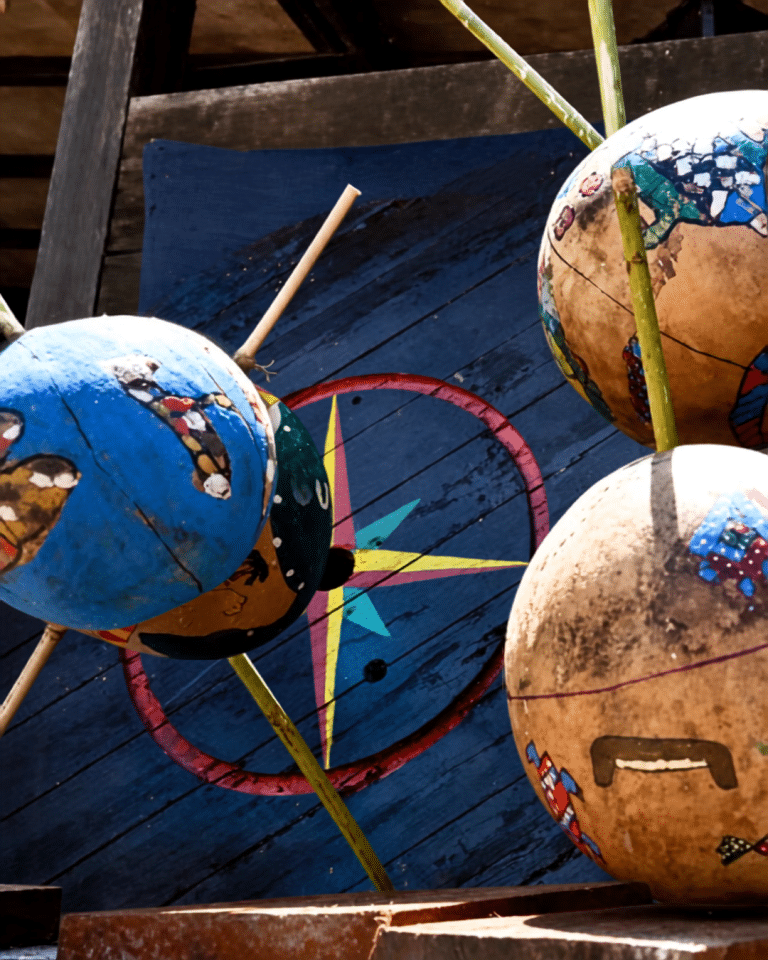
At the Musée d’Aquitaine on cours Pasteur, an extraordinary globe invites visitors to rethink how we picture the world. “Un globe des mondes” runs from 19 June to 13 December 2026, free for under-18s.
Dear visitors,
🎉 We’re delighted to welcome you aboard our double-decker bus.
📅 Every day (except 8 and 10 November and 24 and 25 December): 4 sightseeing tours (no stops) departing from the Tourist Office
🕦 10.15 am
🕑 11.55 am
🕓 2.30 pm
🕓 4.10 pm
Come aboard with us to discover and experience the very best of Bordeaux!
See you soon!

