


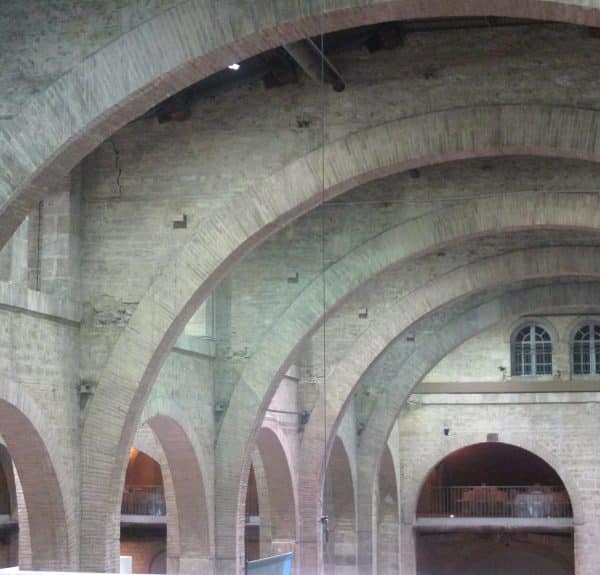
At the CAPC, in the former colonial warehouse on rue Ferrère, two exhibitions are in dialogue this winter. Alexandra Bircken’s “SomaSemaSoma” runs until 3 January 2027, and “Blackground: murmures des mornes” until 28 March 2027.
At the end of rue Ferrère, a stone’s throw from the Chartrons quays, the stone arcades of the Entrepôt Lainé saw sugar, coffee and cocoa from the colonies pass through in the 19th century. Since 11 June 2026, the CAPC museum of contemporary art has been giving voice to that memory with Blackground: murmures des mornes, on view until 28 March 2027. Upstairs, the German artist Alexandra Bircken presents SomaSemaSoma until 3 January 2027. Two exhibitions, one ticket, and one of the most powerful cultural outings of the winter in Bordeaux.
At a glance
The venue
Designed by the engineer Claude Deschamps, who also built the Pont de Pierre, the Entrepôt Lainé was used to store goods arriving from the Caribbean under customs bond before they were sold on. Bordeaux grew rich on this Atlantic trade. Over the 18th and early 19th centuries, the city fitted out around 500 slave-trading voyages. The pale stone façades of the Chartrons and the place de la Bourse still bear the mark of that wealth.
Today, the great nave with its brick vaults has housed contemporary art since the 1970s. The building is anything but neutral, and that is exactly what Blackground chooses to confront.
Exhibition 1
The “mornes” are the hills of the Caribbean islands where maroons, enslaved people who had fled the plantations, took refuge. The title states the intention, to listen to the voices of resistance rather than to the story told by the powerful. Conceived by Cédric Fauq, chief curator of the CAPC, and Salma Mochtari, the exhibition starts from a simple and dizzying idea. The abolition of 1848 did not erase the colonial system, which still marks lands, bodies and minds.
At the CAPC, the route is organised around the plantation and the monument. Among others, you will see works by Julien Creuzet, Josèfa Ntjam, Dominique White and Iris Kensmil. The curators made a clear choice, refusing to make a spectacle of violence and giving space instead to the forms of memory that official history left aside. You come out less overwhelmed than shaken, and keen to look at the quays differently.
Blackground continues in other Bordeaux venues, each with its own angle.
Until 28 March 2027 at the CAPC. Dates may differ at the other venues, so it is best to check each venue’s website before you go.
Exhibition 2
Alexandra Bircken has worked in sculpture since the early 2000s. She combines soft and industrial materials, skin and car bodywork, to question what links our bodies to technology and to social structures. SomaSemaSoma brings together key works from her last decade, in a route designed by the curators Paul Bernard and Sandra Patron.
The visit feels like travelling through an organism, with rooms linked by thresholds and three families of bodies to meet, individual, social and “machined”. Some pieces look like the remains of vanished beings, others like prototypes from the future. It is a more physical than intellectual exhibition, and it speaks to contemporary art lovers and curious visitors alike.
Good to know, Sunday 3 January 2027, the last day of SomaSemaSoma, falls on the first Sunday of the month, when entry to the CAPC is free. Expect crowds that day, and choose a December morning if you want to enjoy the rooms in peace.
Comparison
| Exhibition | Theme | Ideal for | Ends |
|---|---|---|---|
| Blackground Several venues | Memories of colonial slavery, nearly 50 artists | Understanding Bordeaux’s port history | 28 March 2027 |
| SomaSemaSoma Ending soon | Body, technology and sculpture | Contemporary art lovers and fans of striking forms | 3 January 2027 |
| Both | One ticket gives access to all the exhibitions | A cultural half-day in the Chartrons | Before 3 January 2027 |
💡 Bordeaux City Tours tip
Before going into the CAPC, see the city from above. Our Visit without descent tour leaves from stop no. 1 Quinconces, at 10 cours du 30 Juillet, and takes you in 1 hour 20 minutes along the quays, past the place de la Bourse and the merchants’ façades of the Chartrons. You will see with your own eyes the city that Blackground talks about.
Back at the Quinconces, the CAPC is about a ten-minute walk away. The next day, continue at the Musée d’Aquitaine, whose galleries on Bordeaux, the Atlantic trade and slavery host part of the exhibition, or at the Frac MÉCA, facing the Garonne.
Frequently asked questions
Cover photo: Thomon, CAPC voûtes, licensed under CC BY-SA 4.0, via Wikimedia Commons
Bordeaux is rich in history and heritage with its 350 UNESCO listed buildings. Each one more unusual than the next, don’t miss out on discovering them.
We have put together a list of the most important places in the Port de la Lune to visit…
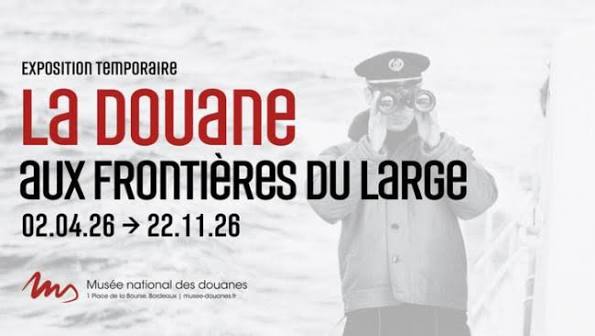
On the quays of Bordeaux, a stone’s throw from the Miroir d’eau, the Musée national des Douanes opens the door to the history of the coastguards and smugglers who shaped the French coastline. The exhibition “La douane aux frontières du large” runs from 2 April to 22 November 2026, in the heart of the Saint-Pierre district.
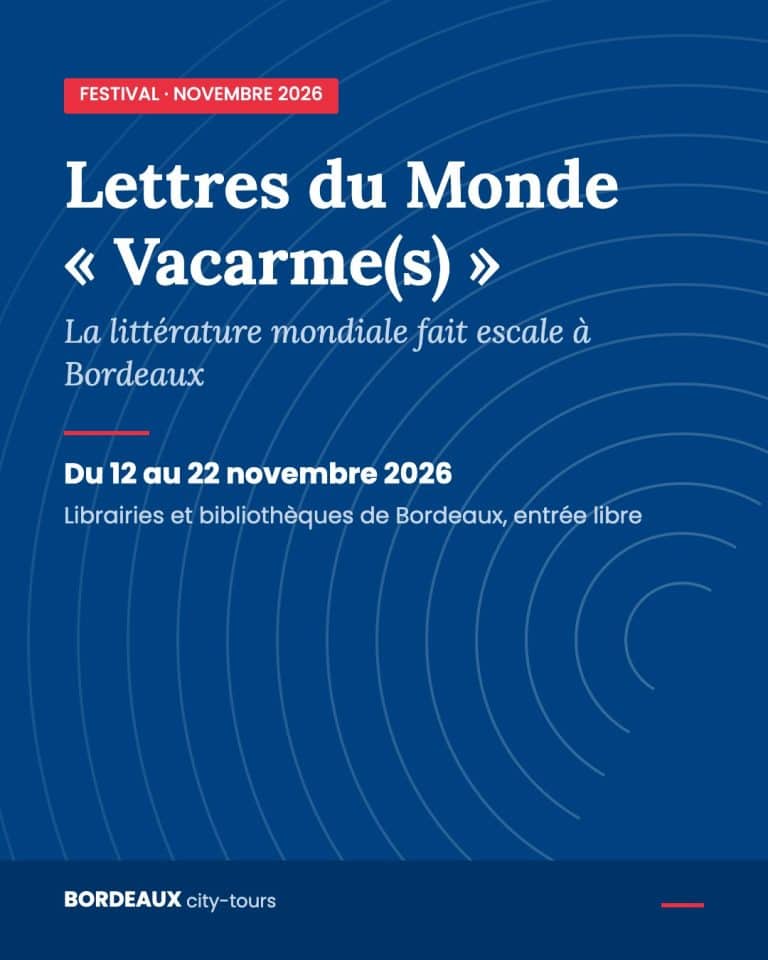
In Bordeaux’s bookshops and libraries, writers from all over the world meet their readers, mostly with free entry. The “Lettres du Monde” festival runs from 12 to 22 November 2026.
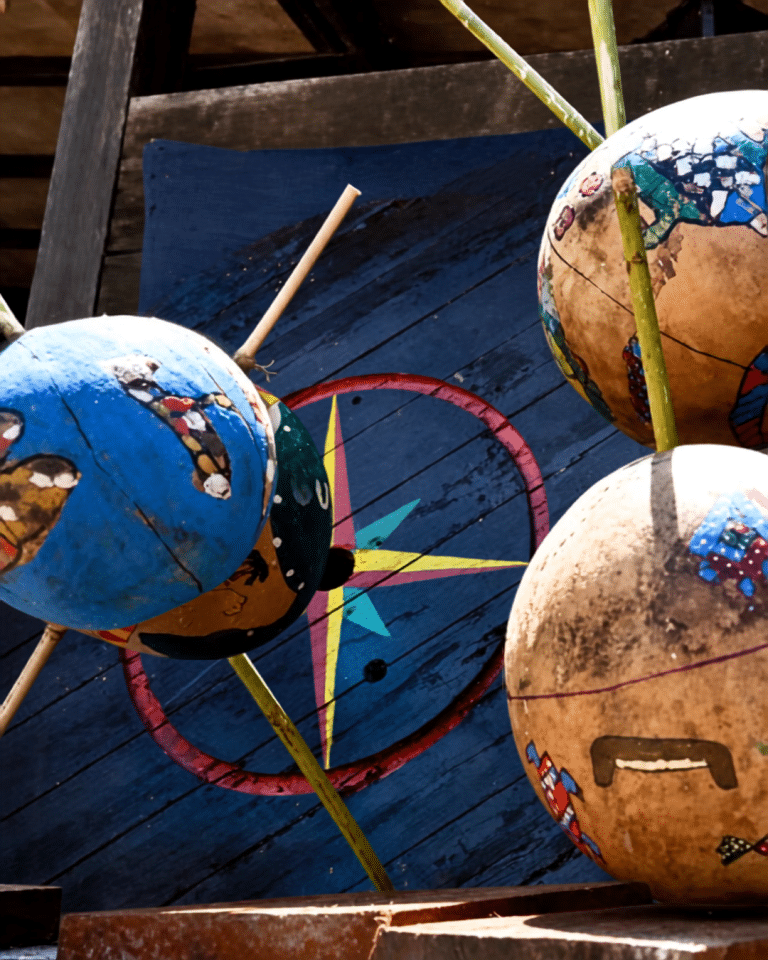
At the Musée d’Aquitaine on cours Pasteur, an extraordinary globe invites visitors to rethink how we picture the world. “Un globe des mondes” runs from 19 June to 13 December 2026, free for under-18s.
Dear visitors,
🎉 We’re delighted to welcome you aboard our double-decker bus.
📅 Every day (except 8 and 10 November and 24 and 25 December): 4 sightseeing tours (no stops) departing from the Tourist Office
🕦 10.15 am
🕑 11.55 am
🕓 2.30 pm
🕓 4.10 pm
Come aboard with us to discover and experience the very best of Bordeaux!
See you soon!

